IndiVillage
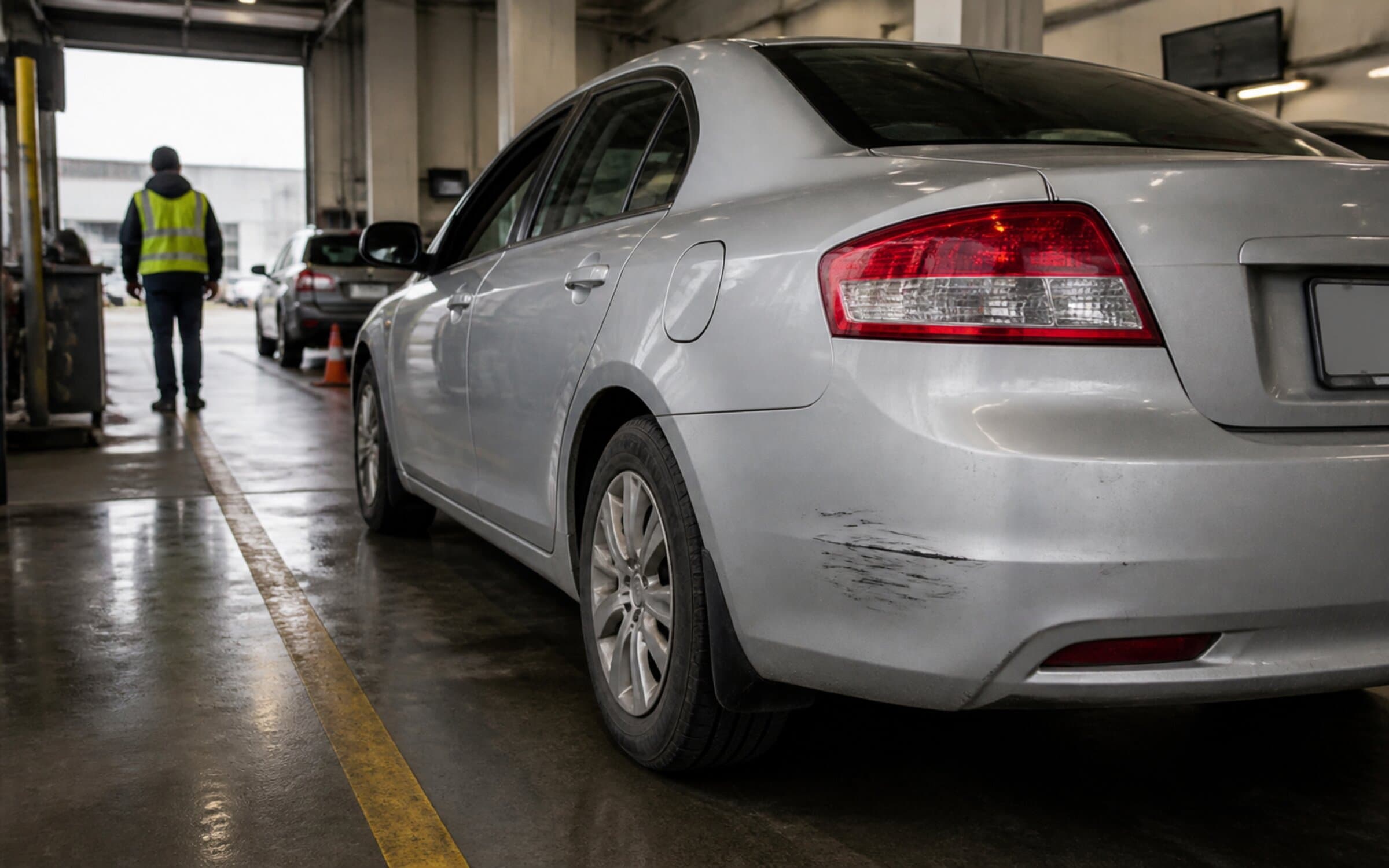
Mid-life passenger vehicle in an inspection-bay environment with a visible scuffed bumper, showing the everyday damage-detection data Baywatch's models classify at frame level.
Case Study · Computer Vision · Automotive
98%
Annotation accuracy sustained throughout delivery. Frame-level discipline prevented drift.
Baywatch · production standard · automotive zero-defect environment
02 · The challenge
Real-world vehicle inspection video is hostile to AI. Lighting fractures across sunlit lots and garage shadows. Camera angles shift as inspectors circle damage. Reflective surfaces bounce unpredictably. Motion blur creeps in during handheld capture.
When Baywatch built early annotation workflows, inconsistency emerged fast. Annotators interpreted damage boundaries differently. Scratch versus dent was ambiguous. Categories drifted subtly across frames of the same vehicle. Annotation drift — the silent killer in training data — was compounding.
Insurance claims are zero-defect environments. An AI that misses a dent or miscategorises damage exposes the business to liability. Baywatch needed frame-level discipline that sustained damage taxonomy rigour across thousands of examples.
03 · How we did it
Frame-level discipline. Standardised taxonomy. Live QA embedded in the workflow.
01
Taxonomy design
Assembled a team with automotive video annotation expertise. Mapped seven critical damage categories — dents, scratches, creases, panels, glass, trim, fascia — with unambiguous visual boundaries. Each category defined with reference frames, edge cases, and decision rules.
7 standardised damage categories
02
Frame-level annotation
Used Encord video annotation platform to tag each frame with pixel-level precision. Bounding boxes and polygons captured damage location, type, and severity. Every frame manually reviewed; no batch processing shortcuts.
100+ frames to production standard
03
Live QA loop
Secondary review embedded directly in annotation workflow. Annotators flagged frames outside standard definitions. Ambiguous cases escalated for team consensus. Multi-pass approach kept accuracy at 98% throughout delivery, not just at handoff.
98% accuracy sustained throughout
04
Production readiness
Annotated frames were clean on delivery. No rework needed. Baywatch’s ML team ingested data directly into model training. Consistent, unambiguous training data accelerated development cycles and prevented models from overfitting to annotation artefacts.
95%+ precision in real-world testing
04 · The outcome
The multi-pass QA loop meant every frame was checked and rechecked. Annotators caught their own inconsistencies before they reached the dataset. Models trained on this data learned genuine damage patterns, not annotation artefacts. Baywatch’s vision models achieved 95%+ precision in real-world deployment across different lighting, camera angles, and vehicle types.
Manual review is still necessary — fraud detection, edge cases, new vehicle types — but automated pre-screening eliminated ambiguous assessments. Claim-to-evaluation time dropped from hours to minutes. Baywatch can now expand to new vehicle categories with confidence because the underlying data pipeline was built to automotive standards.
05 · The mechanism
Frame-level QA isn’t a checkpoint at the end. It’s a continuous loop — every batch reviewed, every ambiguity escalated, every category boundary held. Annotation drift dies in the workflow, not in the dataset.
Operating discipline · the silent killer, contained
06 · The numbers underneath
7
Damage categories standardised across dataset
98%
Annotation accuracy sustained throughout
95%+
AI model precision in real-world deployment
08 · Work with us
Run a vision audit on your footage.
100 frames. Your damage taxonomy. Your accuracy target. Returned in 48 hours — with frame-level feedback.
Run a vision audit
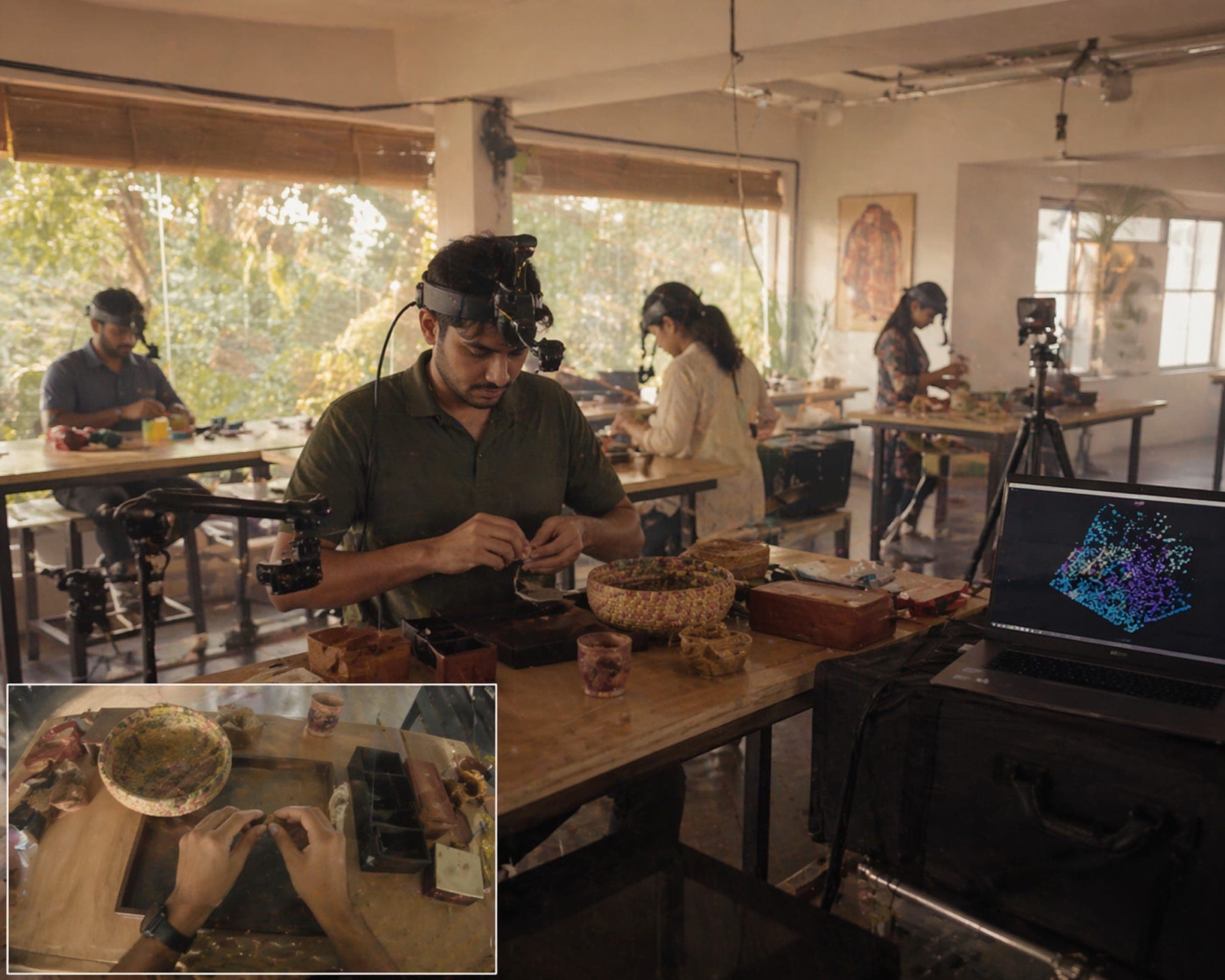
IndiVillage robotics specialist with egocentric capture rig — workstation in background
08 · Work with us
Run a specialist robotics audit.
100 frames. Your modality. Your accuracy target. Returns in 48 hours — with a programme recommendation.