Frequently asked.
How do you annotate egocentric video for robot learning?+
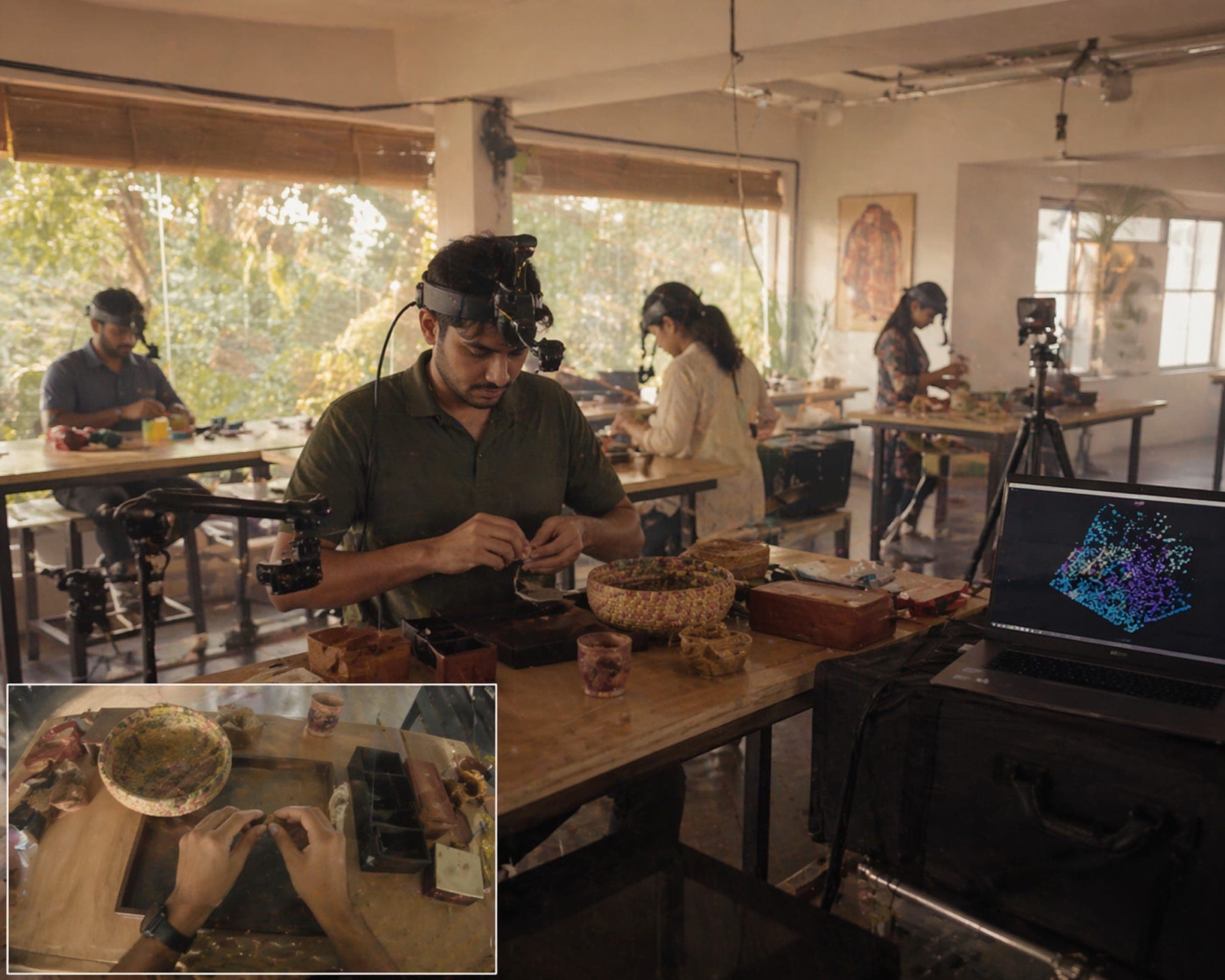
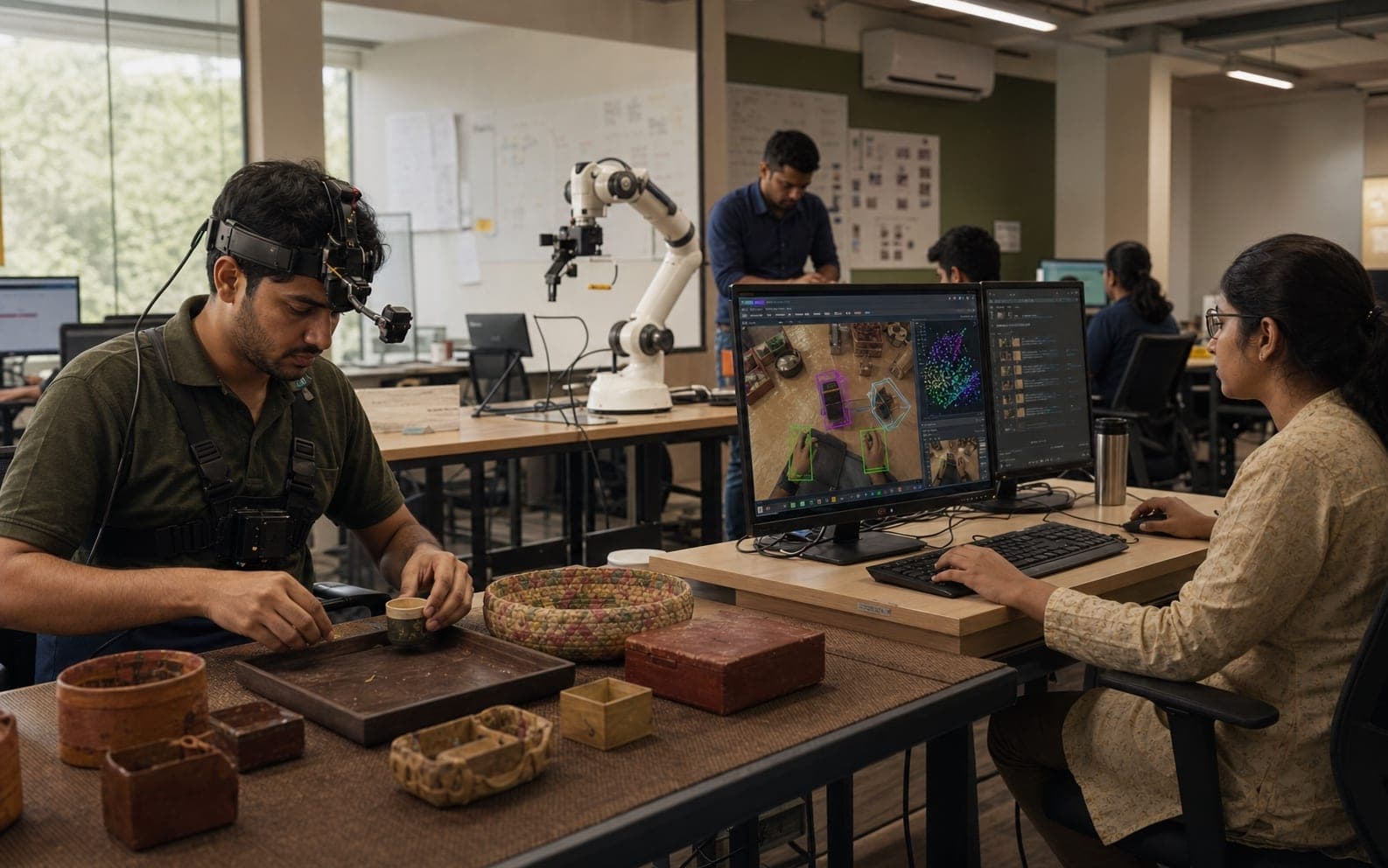
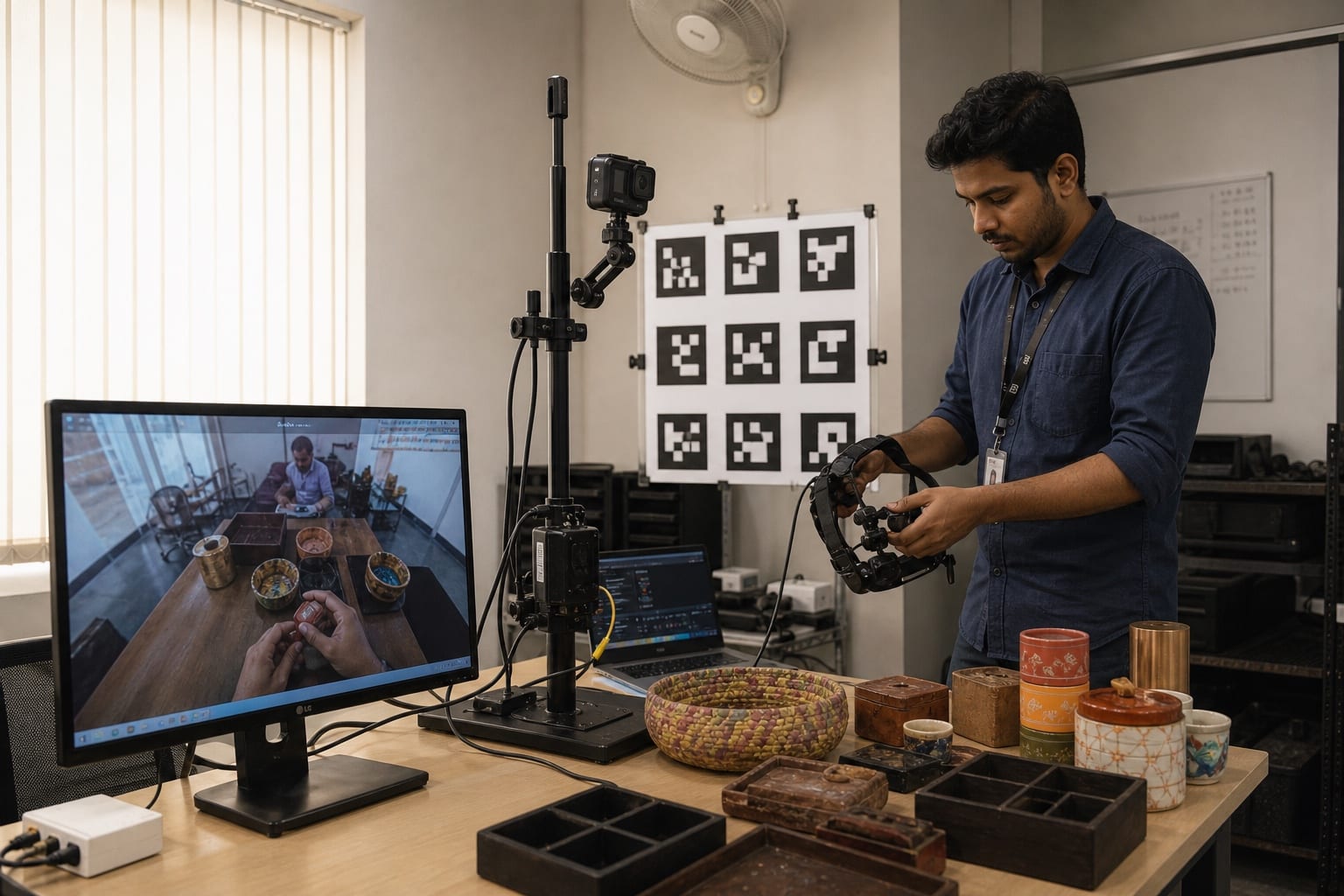
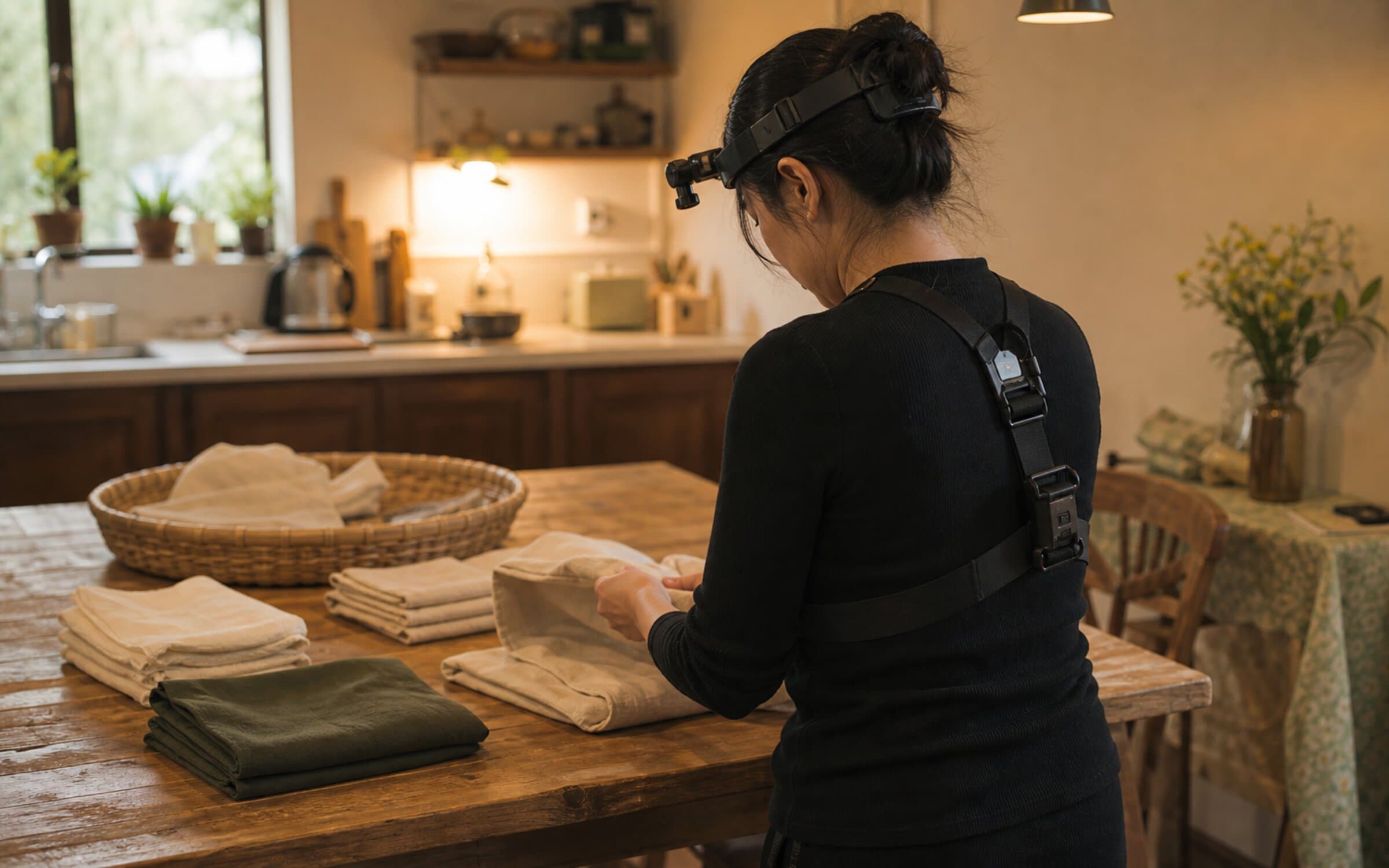
Egocentric video requires frame-level annotation of hand position, gripper state, object interactions, and spatial reasoning from the robot's viewpoint. We use a dedicated robotics team running Machani Robotics' CeCe and RIA programmes in production — egocentric-specific QA protocols, multi-pass temporal-consistency review, and 18 months of zero-drift QA. Capture comes through our upstream egocentric collection service or your own footage; annotation happens against your taxonomy with named annotators retained across the full programme. The same operators who review the first sequence review the last — knowledge compounds inside the team, not in handoff notes.
Can you handle egocentric video and LiDAR in the same programme?+
Yes. Cross-modality programmes are standard. We assign modality specialists per stream — egocentric, LiDAR, 3D cuboids, sensor fusion — managed under a single QA framework and one delivery lead. Synchronised exports across modalities mean cleaner training signals downstream and less reconciliation work for your ML team. Programme economics scale with the modality mix rather than penalising multi-modal complexity. Typical programmes ship a coherent dataset across two to four modalities at the same accuracy threshold, calibrated on the harder modality not the easier one.
How do you maintain 99.4% accuracy at high volume?+
Three layers hold the line at volume. First, gold-set construction at programme start — your taxonomy, your accuracy bar, agreed before annotation begins. Second, multi-pass review with dedicated QA specialists per modality (L1 annotator → L2 reviewer → L3 QA), plus a documented disagreement-resolution protocol for ambiguous frames. Third, drift detection through proactive dashboards built inside the programme — inter-rater agreement and seasonal variance tracked automatically, surfaced before quality regresses. The 96% staff retention across 16 years is the underwriter: same annotators across years means knowledge compounds inside the team rather than reset every quarter.
What does a robotics audit cover?+
A free 48-hour audit on 100 frames in your modality — egocentric, LiDAR, 3D cuboids, or sensor fusion. We return annotated output, an accuracy benchmark against your target, and a programme recommendation, with delivery-ready exports in your tooling (COCO, YOLO, KITTI, or custom JSON). The audit is unpaid by design and the scope is returnable. If you scale, a 4-week paid pilot follows — bounded scope, production-grade work, validates process, quality, and team fit before committing to production volume. The audit and pilot together de-risk the decision; production is the destination, not a leap.
Do you handle multi-sensor fusion?+
Yes. Camera-LiDAR alignment is a standard offering — calibration-aware workflows that hold labels synchronised across modalities and temporal frames. We project 3D cuboids back into 2D for cross-checked agreement, run reconciliation against your sensor calibration, and deliver fused datasets with one coherent taxonomy. Multi-sensor sweeps reduce reconciliation work for your ML team and produce cleaner training signals on perception and prediction models. Common combinations: camera + LiDAR, camera + radar, multi-camera arrays. We adapt to your sensor stack rather than asking you to adapt to ours.
 Machani Robotics