Frequently asked.
How do you annotate camera + LiDAR fusion?+
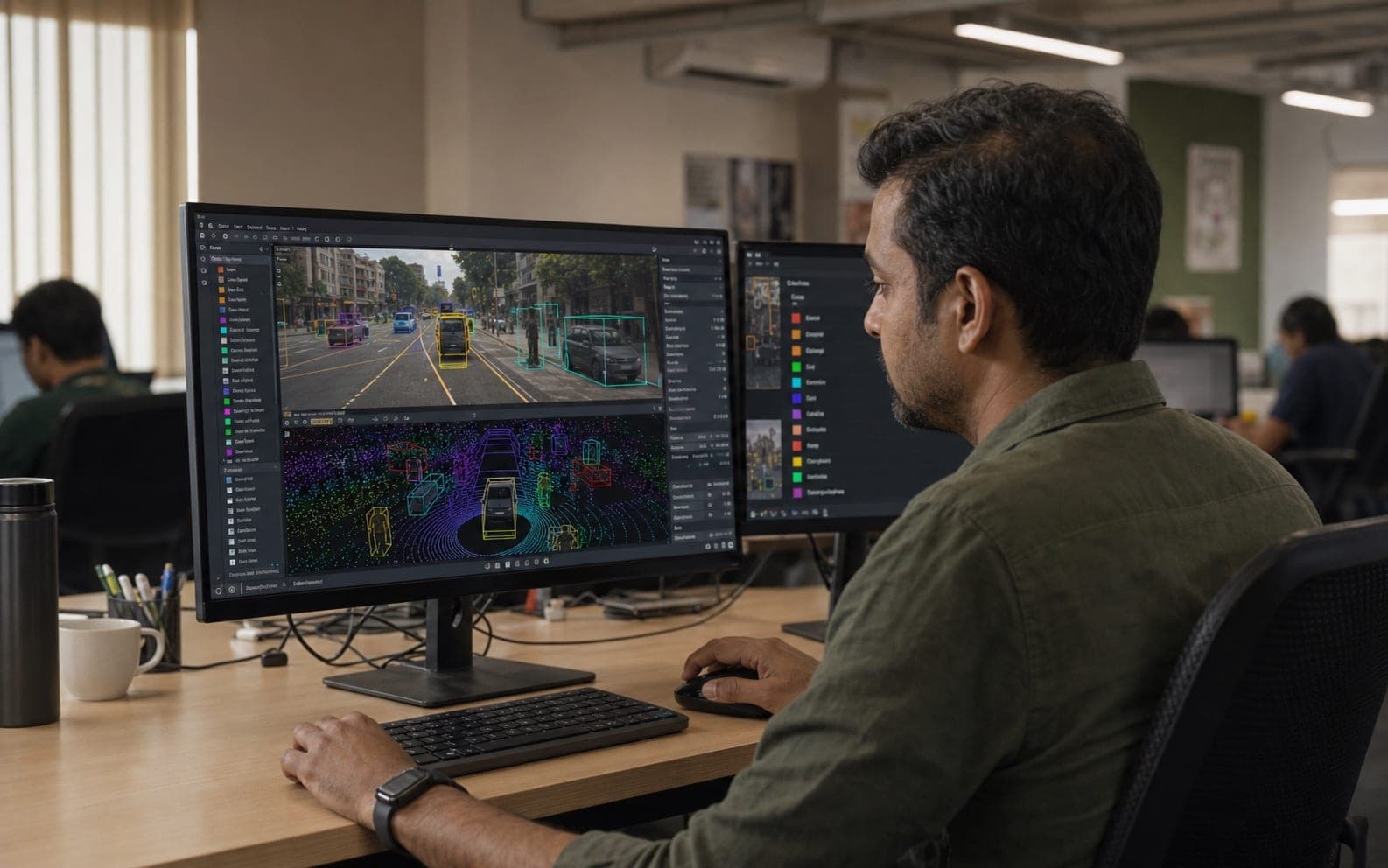
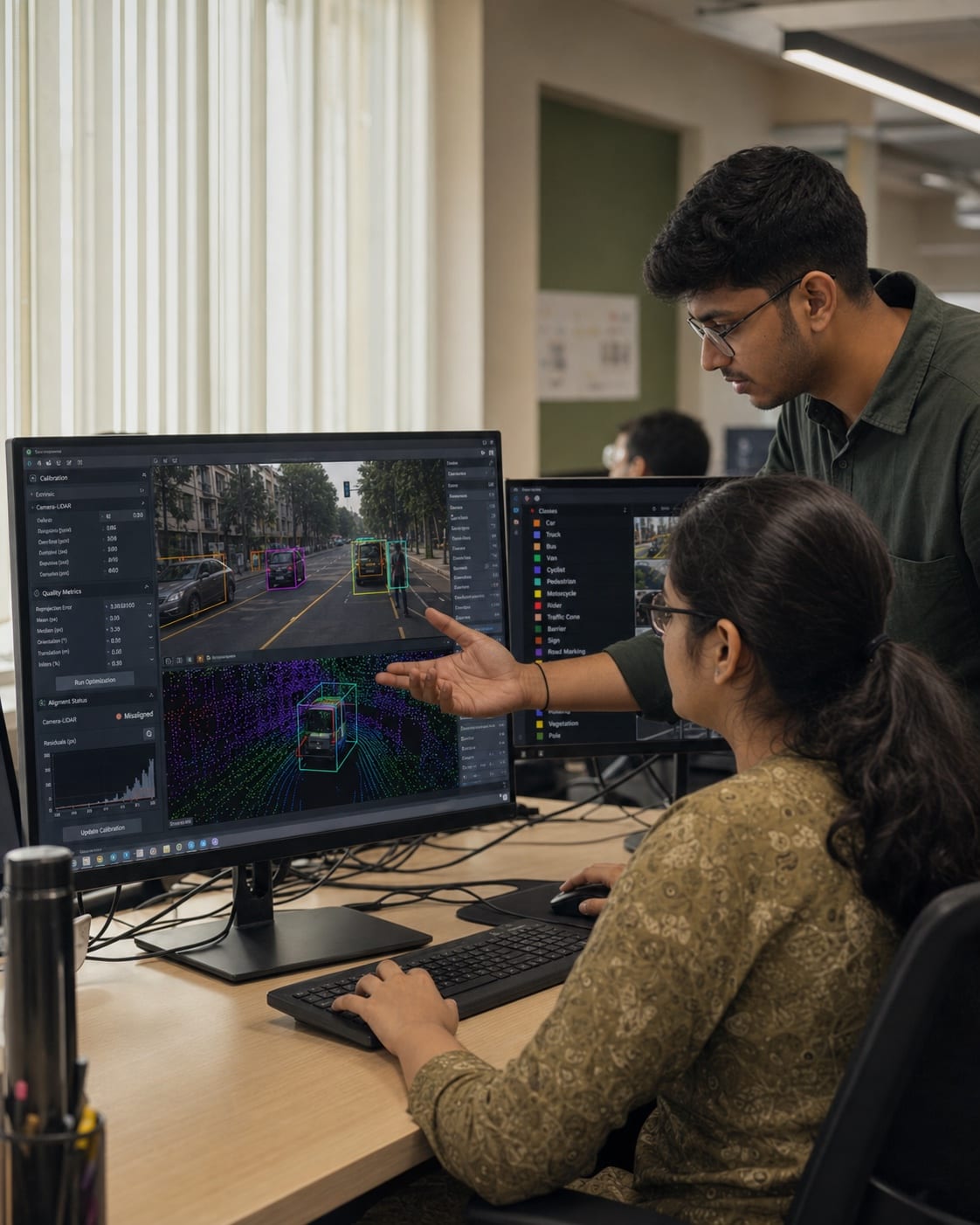
Camera-LiDAR alignment is a standard offering. We use calibration-aware workflows so labels stay synchronised across modalities and temporal frames. Multi-sensor sweeps reconciled per frame; 3D cuboids and 2D projections cross-checked for agreement. Less reconciliation downstream means cleaner training signals.
What's your approach to edge cases?+
AV failures cluster in the ambiguous: poor visibility, dense traffic, construction zones, rare behaviours, weather. We mine edge cases from your raw footage and annotate them to your taxonomy with the same QA cadence as the bulk dataset. Edge-case rate per batch is tracked as a delivery KPI.
How do you handle behaviour and trajectory annotation?+
Pedestrian, cyclist, and vehicle intent labelled frame-by-frame with multi-frame continuity. Object tracks held across occlusions. Trajectory annotation maps observed motion to predictive labels for downstream prediction model training. Behaviour taxonomies co-developed with your ML team.
Do you have a public AV case study?+
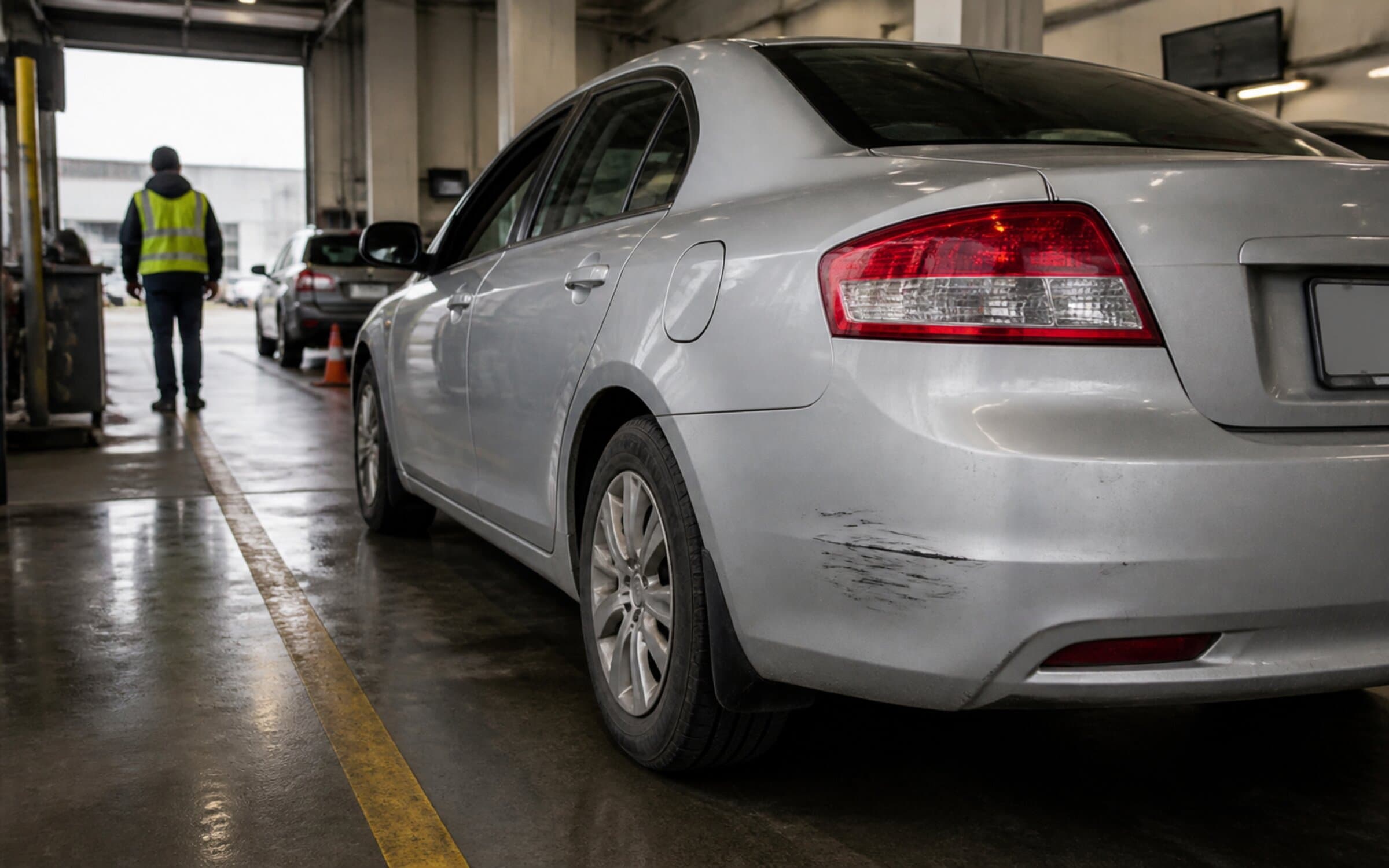
Public AV case studies are restricted by client NDAs in this sector. Our autonomous-grade work appears in adjacent published form — Baywatch (automotive video annotation, 95%+ model precision) and the Machani Robotics programme (18 months zero-drift, 99.4% accuracy on 3D annotation). We can walk through an NDA-protected reference call on request.
What does an AV audit cover?+
A free 48-hour audit on 100 frames in your modality — bounding boxes, polygons, 3D cuboids, sensor fusion or behaviour annotation. We return annotated output, an accuracy benchmark against your target, and a programme recommendation. If you scale, a 4-week paid pilot follows — bounded scope, production-grade work, validates fit before scale commitment.
 Baywatch